Silversoap Media Web Design Tutorial

Tired of your current job? Want to be a part of something new and cutting-edge? Look no further!

The folks at Silversoap Media have employed a great system that yields an insanely awesome ROI!

After reading this simple step by step guide, you’ll be able to set up your very own web design company.

What you’ll need

That’s it!

Getting Started

So now you’re a professional web designer. Before you can start making loads of money, you have to look the part. But wait, what if you actually don’t know how to design a website?

No problem!

You can be a professional web designer without knowing an ounce of design, thanks to our friends at Themeforest.net. Themeforest allows you to buy website templates, slap your logo on them, and call them your own creations. In school that was called cheating, but school never made anyone money, did it?

Step 1: Buy yourself a template

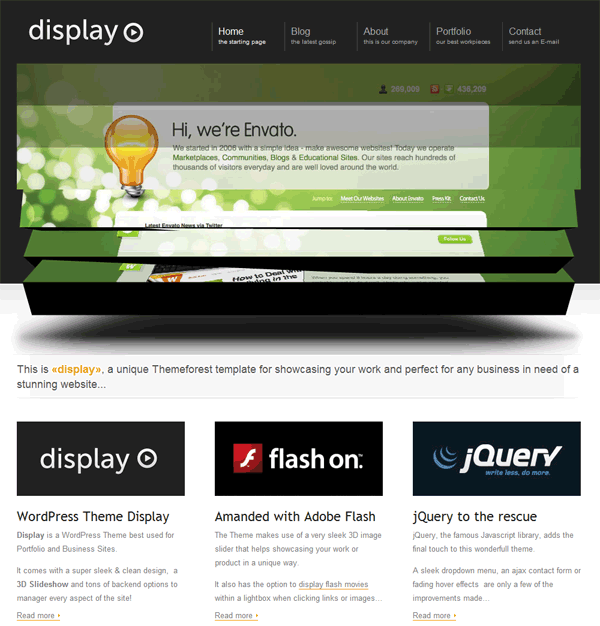
Consider buying this template that implores an awesome rotating box of pure-awesome. And it’s only $40!
Silversoap Media Template

Step 2: Make extremely minor adjustments

You want people to think that this was created by your own craftsmanship. The best thing to do is make adjustments to the content, but leave the design the same. Let’s take this step by step.

The Header

Original Template:

Website Template

With Adjustments:

Silversoap Media Web Design

The Slider

Original Template:

Website Template

With Adjustments:

Silversoap Media Web Design

The Content

Original Template:

Website Template

With Adjustments:

Silversoap Media Web Design

The Footer

Original Template:

Website Template

With Adjustments:

Silversoap Media Web Design

And finally we arrive at…

The Finished Product!!!

Silversoap Media Web Design

That wasn’t so bad! Only 30 minutes and $40 have elapsed, and we already have a good looking website that establishes your credibility as a web designer. It’s time for the next step.

[editor's note: The fine people at L2 Marketing, frequent clients of Silversoap, were kind enough to call and tell us that we had no way of knowing how long the "design" process took them. This is true and so I have modified the post appropriately. I only know that it would have taken us 30 minutes - I have no way of knowing how long it took them...]

Step 3: Market yourself as a professional

Convince family, friends, and business owners to visit your new website so they can see how great it looks. They’ll surely be impressed by the 3D Flash box slider. After they’ve been wowed with your creativity, they’ll surely tell their friends, family members, and business owners how awesome you are at web design.

Pretty soon, someone with money will hear your name through the grapevine. At that point, they may commission you to create a website for them.

But wait, you still don’t know how to actually design a website!

Relax! Themeforest has a large number of template categories to choose from, ranging all the way from churches to food.

Website Template

Step 4: Buy a template for your new client

Choose the template that best reflects your client’s business image. If you don’t know what a business image is or don’t know how to determine an appropriate representation of one, that’s alright.

Suppose your client is in the catering industry. Simply look up the food category on Themeforest and find the template you like best.

After you’ve purchased the template for $15, make the minor adjustments like you did to your own website, and slap the company’s logo on it.

Before:

Website Template

After:

Corazon Catering Tyler

A change in texture and some slight content adjustments should do the trick.

So the client is extremely happy with the design. Be sure not to disclose that the site is a template: This may cause the client to feel cheated. Why would you ever want to say something to make someone feel that way?

[editor's note: I've been told that the client we've used as an example was aware of the nature of the transaction. That's good at least. Now everyone else is too.]

Chances are the template you purchased has been implemented hundreds of times by other aspiring web designers such as yourself. In the previous example, our food template has been implemented 158 times by other companies.
Website Template

Now it’s time to move on to the final and most important step:

Step 5: Recover your investment

So far you’ve spent $55 on your company. It’s time to recover that investment. Not everyone is tech-savvy enough to copy and paste someone else’s code or Photoshop file. You should be properly compensated! Charge between $1000-$1,500 for the website. This feels like a happy medium. It’s not too cheap to where people think you didn’t do any work (or that they could do it themselves). But it’s also not too expensive, so more people can afford you.

Congratulations, Web Designer!

You are now armed with all the knowledge you need to become a super awesome web designer! Simply repeat this set of processes over and over again until you dominate your local market.


Related Posts:

About the Author:

Joseph is the lead developer of Vert Studios, a web design company located in Tyler, Tx. Follow him on Twitter! @Joe_Query.

  1. Kevin Western

    I think it’s shady when people do this. They call themselves a web-designer without putting any effort into designing. Especially when their design portfolio consists of used templates.

    On the flip side, as a web *developer* I prefer buying templates simply because my artistic side is lacking and I don’t want to spend time designing, I like coding =). However, if I do any work for someone I would definitely give full-disclosure of using a template.

    • Thanks for stopping by Kevin. I’ll be the first to say I know how you exactly how you feel. The reason why I left my own company to join Justin at Vert was because coding was my strong point and design was his strong point. We complement each other well that way. So while I understand the importance of ensuring most of your time is spent coding, have you considered contracting designers for the design portion of your projects? If so, why do you believe templates are a better alternative?

      Good to see you commenting on the blog!

  2. @Kevin – Thanks for stopping by bud – it’s always great to hear your input.

    I think I speak for both Joseph and myself when I say that we don’t have anything against web templates. They can be a good solution for some businesses or organizations that are just getting started or don’t have a budget to speak of, and most templates these days are actually of very high quality. If a client’s business can deal with the fact that their site won’t be original or unique they’re often an easy and cost effective solution.

    As “web people” we want cool stuff online and would rather see people use templates to communicate than have no presence online at all – a custom site is always better for credibility but lack of money for a fully custom design is a dumb reason not to have a site in this day and age.

    The problem we both have, and that you hit on in your reply, is that far too often the fact that a template is being used is not disclosed. We pick on one of our direct competitors above because we were sick of feeling like we weren’t competing on even ground, but the problem extends far beyond this one example and is unfortunately rampant within our industry. I’ve even seen templates featured in web design showcases before (and not by the template creator mind you – some people have actually had the cajones to take credit for a purchased product in a design contest!)

    In my mind it is NEVER OK to take credit for work you didn’t do. If you offer web design you better have designed your own site. If you show a template site in your portfolio and don’t *explicitly* state that you did only development you mislead the market, whether a designer tells that particular client the nature of the arrangement of not.

    There will always be a need for template set up services (although hopefully for the clients not at 1000% markup) – people just need to call a spade a spade.

  3. This is a very pointed and appreciated article. Over at Azalea Technology, we agree with the notion that it’s paramount to have a policy of full disclosure when it comes to the originality of any artistic work — Web sites included. The authenticity of an original work should never be substituted, even assumed, for any derivative work, especially in a marketplace where original works are commonly expected.

    If a competitor uses templates to provide affordable solutions (i.e. derivative works rather than original ones) for its customers, that’s a certainly a valid business model. We think the consumers and industry would appreciate and benefit from a forthright representation of this model. We know we would. The model is unique in that it offers an up-front cost savings to consumers in exchange for the forfeiture of an original work. Where there is no concern for the competitive advantages of an original work, this solution has value for consumers.

    Whether in advertising services, soliciting business, providing estimates or quotes or completing the work, integrity is priceless. As we know, the sad reality is integrity cannot be bought or traded where it’s found lacking. Thanks again for helping encourage full disclosure in an industry where competitors appear to lack the confidence to represent this unique model business model in a forthright manner.

    Regards,

    Ben Roberts
    Partner
    Azalea Technology, LLC.
    Tyler, Texas

    • Spot on comment, Ben. Thanks for stopping by. My main philosophy when it comes to template redistribution is that templates should serve as a substitute for time, not skill. If a prospect can’t afford your hourly rate X the number of hours needed to make a custom site, you might offer a template as an alternative. However, redistributing templates constantly simply because you can’t come up with design ideas on your own is sketchy. (And if you can’t come up with a custom design for your own company, how could you ever come up with a custom design for someone else’s company?).

      One instance where a template proved sufficient was my own math site, math3425.com, where I post flash cards for fellow students in my university math class. The site has no ideas/opinions I want people to accept, and I do not intend on monetizing it in any way. The only purpose of the site is to provide quick links to flash cards. Thus, anything beyond basic accessibility and presentation becomes unnecessary.

      I agree that integrity and transparency are lacking in the web design industry. I agree so much, in fact, that it’s actually the subject of an upcoming post. Hope you subscribed!

Add to the conversation: